







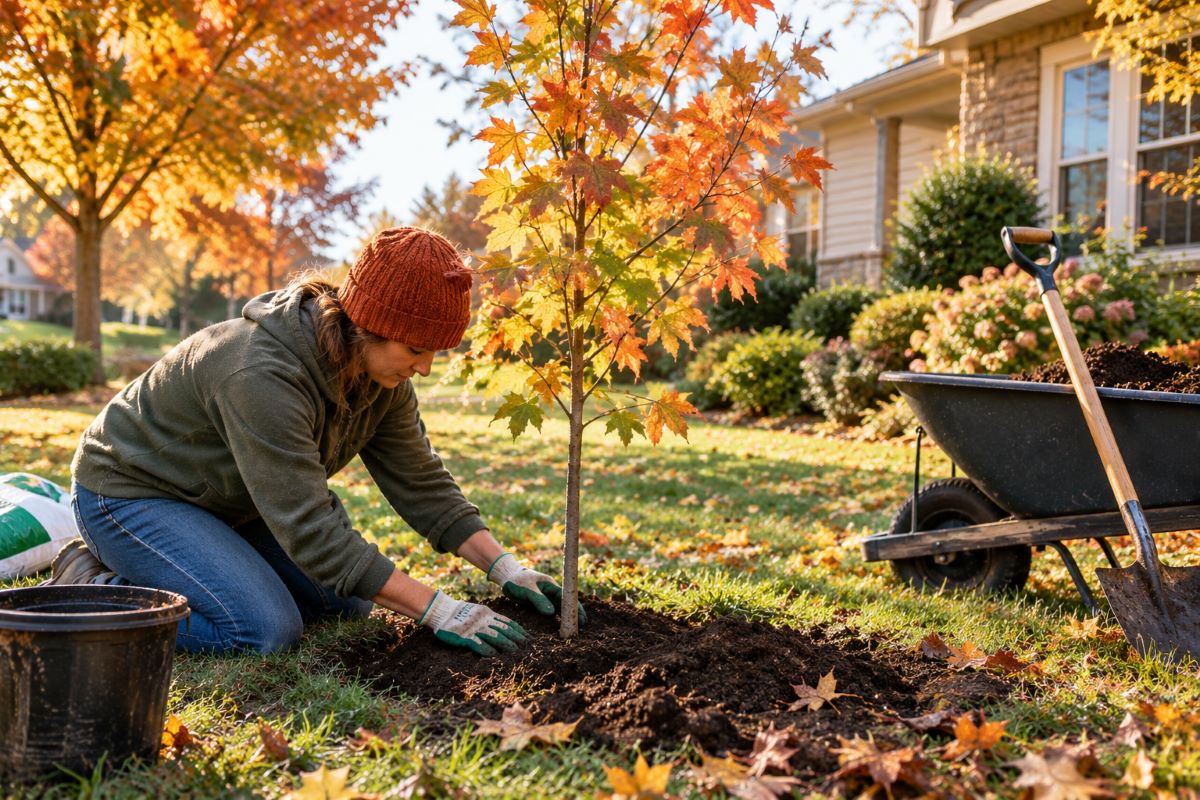
A tree can change how a yard feels for years. It may provide shade, frame a view, soften a property boundary, or become the feature you notice first when arriving home.
Choosing where and what to plant deserves more attention than selecting the prettiest tree on the lot.
October gives Lexington homeowners an opportunity to review those decisions. Fall tree planting can be suitable for many trees and shrubs in Kentucky, provided the plant, site, timing, and follow-up care work together.
The University of Kentucky explains that fall planting can give suitable plants an opportunity to develop roots before the demands of spring growth. Its fall planting guidance also emphasizes continued watering during establishment.
That does not mean every species belongs in every yard or that an October planting needs no care. Start with the location and your goals, then select plants that fit.
Decide What You Want the Planting to Accomplish
Before browsing trees, identify the job you want the landscape to do.
Are you hoping to create shade near a patio? Add screening? Replace a lost tree? Make the front entrance feel more welcoming?
Different objectives lead to different plant choices and locations.
Write down your main priorities:
- Shade or screening.
- Seasonal flowers or foliage.
- Space available at maturity.
- Views you want to preserve.
- Maintenance you can reasonably provide.
- Relationships with patios, paths, and buildings.
A landscape planting plan does not need to be complicated at the beginning. A photograph and a few clear notes can help explain what you want.
Consider the Whole Yard
A tree will affect more than the spot where its trunk stands.
Think about its eventual canopy, nearby planting beds, and how people move through the property. Consider whether shade will be welcome in one area but interfere with another use.
A coordinated plan helps a new tree belong in the landscape rather than appear as an isolated addition.
Match the Plant to the Site Before Choosing a Variety
The same plant can perform differently in two yards with different conditions.
Review sunlight, drainage, soil, exposure, and available space before narrowing the selection.
Observe Sunlight Across the Day
Describe the location accurately. A bed that receives morning sun and afternoon shade is different from one exposed throughout the day.
Nearby buildings and existing trees can influence conditions. Photographs taken at different times help show what a planting area actually receives.
Avoid choosing a plant simply because a neighbor grows it successfully. Their site may differ from yours.
Notice Drainage and Soil Conditions
Look for areas where water collects after rain or where soil remains unusually wet.
Compacted ground, previous construction activity, and existing landscape features may need assessment. Do not assume adding a tree will correct a drainage problem.
For tree planting in Lexington, KY, site suitability should be part of the selection conversation. If conditions are uncertain, ask what further assessment is appropriate.
Plan for Mature Size
A young tree can look comfortably small beside a house or driveway. Its mature dimensions may tell a different story.
Ask about the expected size of the specific species or cultivar.
Review its relationship with:
- Buildings and rooflines.
- Walkways and driveways.
- Overhead utilities.
- Other trees.
- Outdoor seating.
- Views and sightlines.
Give Small Yards a Specific Plan
A smaller yard does not automatically rule out a tree, but it makes selection more important.
Explain the space available and the purpose of the planting. Ask about choices suited to the site rather than assuming regular pruning will keep any tree permanently small.
The plant’s natural growth habit should fit the location.
Leave Space Between Plants
The same principle applies to fall shrub planting.
A densely filled bed may look complete on installation day but become crowded later. Review mature spread and spacing before ordering quantities.
Ask how the planting will develop over time. An intentional amount of open space can be part of a sensible design.
Confirm Whether Fall Is Appropriate for the Selected Plant
Fall is a useful planting season for many Kentucky landscape plants, but species and site conditions matter.
Ask specifically about the plant you are considering, its nursery form, and the proposed installation date.
Do not treat a seasonal recommendation as a guarantee of establishment.
Consider Your Ability to Provide Care
A suitable planting still requires follow-up.
If you will be away frequently or cannot monitor watering, discuss that before installation. A delayed project with a workable care plan may be preferable to planting when nobody can maintain it.
Confirm Availability Without Choosing by Inventory Alone
Ask the garden center about current choices and availability.
If a preferred plant is unavailable, evaluate alternatives against the original requirements. A substitute should fit the light, soil, mature size, and design goals.
Do not choose an unsuitable tree simply because it is ready for immediate pickup.
Prepare the Location Before Installation
Professional tree and plant installation begins with understanding the site and agreeing on the scope.
Confirm the proposed placement, access, existing plants, and any work needed before installation.
Identify buried utilities and other underground features through the appropriate process before digging. Tell the installer about irrigation, lighting cables, or property systems you know about.
Discuss Existing Plants and Materials
Will an old stump, shrub, or planting bed need attention? Is existing mulch being reused or replaced? Does access require moving furniture or opening a gate?
These details can affect the job.
Redmond’s tree and plant installation service connects plant selection with landscape design. Use that discussion to clarify how the new planting fits the existing property.
Ask What the Installation Includes
Clarify plant supply, installation, mulch, cleanup, and any additional work.
Ask how changes or unexpected site conditions will be communicated. A shared understanding helps prevent assumptions about what is included.
Understand Planting Depth and Root Care
Planting involves more than digging a hole deep enough to hide the root ball.
The plant’s root structure, nursery form, and site conditions influence the appropriate method. Ask the installer how the root flare and planting depth will be evaluated.
The University of Kentucky’s woody plant guidance explains that excessive depth and inappropriate planting practices can interfere with establishment.
Avoid Treating Soil Amendments as an Automatic Fix
Do not assume every planting hole needs a fertilizer mixture or a bagged amendment.
Discuss the soil and selected plant first. Any recommendation should address actual conditions rather than a universal recipe.
Ask About Support and Protection
Some situations may require staking or protection; others may not.
Ask what is appropriate, why it is being used, and when it should be reviewed or removed. Avoid adding support without understanding its purpose.

Make Watering Part of Your Fall Tree Planting Plan
Cooler weather does not eliminate the need to monitor a new planting.
Rainfall, soil conditions, plant size, and other factors affect watering. Ask for instructions specific to your installation.
Check Conditions Rather Than Following the Calendar Alone
A fixed watering reminder can help you remember, but it should not replace checking the soil and plant.
Explain your irrigation setup and whether you will water manually. Ask how to assess moisture around the root area and recognize when advice is needed.
Too little and too much water can both create problems.
Keep the Instructions Available
Save the care information and share it with anyone helping maintain the yard.
Record the plant names and installation date. That makes future questions easier to answer and helps you identify the correct plant when seeking advice.
Use Mulch Carefully
Mulch can support moisture management and help define a planting area.
The University of Kentucky’s mulching guidance explains its role in buffering soil conditions and protecting the root environment.
However, more mulch is not automatically better.
Keep the Trunk Clear
Discuss appropriate depth and coverage, and keep mulch from being piled against the trunk.
If mulch already exists, assess it before adding another layer. Repeated additions can create excessive depth.
Coordinate Mulch With Maintenance
Consider how the area will be edged, weeded, and protected from lawn equipment.
A planting ring should support care without creating a new obstacle. Ask about practical maintenance for the selected design.
Review Pruning and Fertilizer Separately
New planting is not a reason to prune every branch or apply fertilizer automatically.
Ask what work is appropriate for the individual plant and season.
Avoid general trimming simply to make a young tree look symmetrical. Its growth habit and structural needs deserve consideration.
Likewise, use soil information and professional guidance when discussing fertilizer. A product purchase should follow a defined need.
If an established tree has damaged limbs or a concern near buildings or utilities, arrange suitable professional assessment. That work may be separate from a new planting project.
Prepare for a Garden Center Visit
When visiting a garden center in Lexington, KY, bring more than a preferred plant name.
Useful information includes photographs, approximate dimensions, sunlight observations, drainage concerns, and your goals.
Tell the team about pets, children, nearby structures, and maintenance preferences that could affect selection.
For an October project, ask about plant availability, installation scheduling, and care expectations. If the project cannot reasonably be completed this fall, use the discussion to develop a later plan.
Redmond’s offers tree and plant installation alongside landscape design services. That makes it possible to discuss a single planting in the context of the wider yard.
Frequently Asked Questions
Can I plant trees in October in Kentucky?
Many trees and shrubs can be suitable for fall planting in Kentucky, but suitability depends on the species, site, and conditions. Ask about the specific plant and proposed date. October should be treated as an opportunity to assess and plan, not a guarantee that every planting will establish successfully.
What should I check before buying a tree?
Review sunlight, drainage, available space, mature size, and the purpose of the planting. Consider buildings, utilities, and nearby plants. Bring photographs and measurements to the garden center so recommendations reflect the actual location rather than appearance alone.
Do newly planted trees need water in fall?
Yes, they need moisture monitoring and appropriate watering during establishment. Cooler weather does not guarantee adequate rainfall or suitable soil moisture. Obtain plant-specific instructions and check conditions. Avoid watering automatically when the soil is already wet.
How much mulch should I put around a new tree?
The appropriate amount depends on the existing mulch and installation. Ask for specific guidance, keep the trunk clear, and avoid adding material without checking the current depth. Mulch should support the root environment rather than form a mound against the tree.
Should I fertilize a tree immediately after planting?
Do not assume fertilizer is necessary. Discuss the plant, soil, and establishment plan with a knowledgeable professional. Product choice and timing should follow an identified need. Fertilizer does not compensate for unsuitable placement, poor drainage, or incorrect planting.
Does Redmond’s provide tree installation in Lexington?
Redmond’s website confirms tree and plant installation services, with support for landscape design and selection. Contact the team to discuss your property, intended plants, and scheduling. Confirm the proposed scope and follow-up care before installation.
Plan Fall Tree Planting Around Your Property
Successful fall tree planting starts with a suitable plant, an appropriate location, and a care plan you can follow.
Use October to assess the yard, compare choices, and coordinate installation.
Explore Redmond’s tree and plant installation or contact the team. Call 859-272-6697, or visit 4432 Old Nicholasville Rd., Lexington, KY 40515, to discuss your planting goals.
