







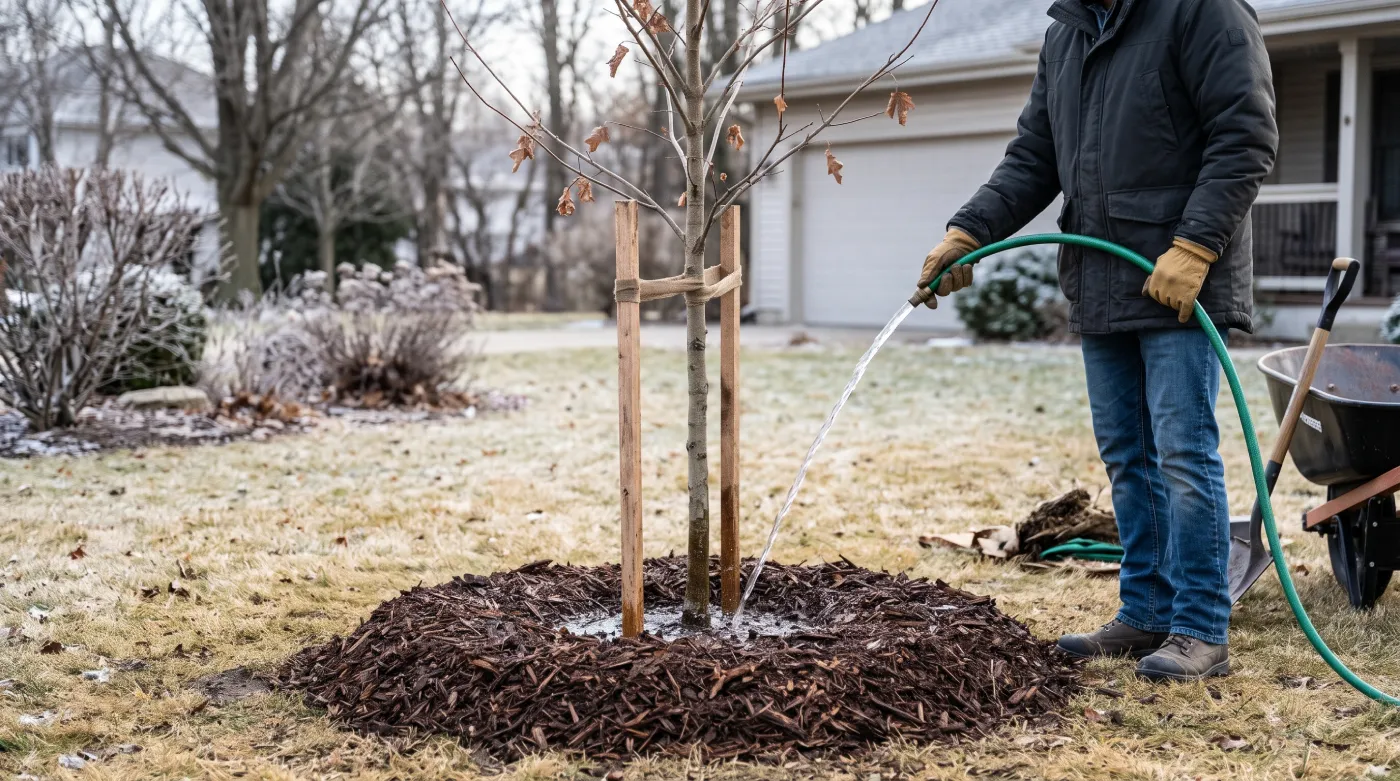
Watering newly planted trees in winter is a condition-based task, not a fixed weekly appointment. Recent plantings still need appropriate moisture, but the decision depends on the root area, precipitation, drainage, tree, and current weather. Do not water frozen soil or add water simply because a calendar reminder appears.
A tree that has lost its leaves is not automatically established. At the same time, cool weather and rain do not mean that every new tree needs additional water.
For Lexington and Fayette County gardeners, November is a useful time to review recent plantings before winter conditions change. Start with a soil check and the planting team’s instructions. The goal is to maintain suitable moisture without creating a persistently saturated root area.
Understand Why New Plantings Need Special Attention
A newly planted tree has not yet developed the same relationship with the surrounding soil as an established tree. Its original root area and the nearby ground can differ in texture and moisture behavior.
That difference makes surface appearance an unreliable guide. The garden may look damp while the root ball has a different condition, or the surface may appear dry while the planting area remains wet below.
University of Minnesota Extension’s new-tree watering guidance emphasizes consistent care during establishment. Its general principles are useful, but a Minnesota calendar should not be copied directly into a Kentucky garden.
Ask about your actual tree, planting date, stock type, and site. Those details support a more appropriate local aftercare plan.
Begin With the Instructions From Planting
Keep the care information provided with the tree or installation. It should be the starting point for questions about moisture checks, mulch, and follow-up.
If the instructions were designed for planting in warmer weather, ask how to adapt the routine as conditions change. Do not assume the same frequency remains appropriate through every season.
Tell the supplier whether the site is exposed, sheltered, low-lying, sloped, or surrounded by hard surfaces. Mention any irrigation system and how it is scheduled.
A short conversation can resolve confusion between “check regularly” and “water regularly.” Those are different instructions. A tree may need regular observation even when no additional water is appropriate.
Check the Root Area Rather Than Only the Lawn
Assess moisture where the recently planted roots are located, using the method recommended for the tree and site. Avoid damaging roots or disturbing the planting.
Check more than one accessible point if the planting conditions require it. The original root ball and surrounding soil can respond differently to rain and irrigation.
Do not rely on the color of nearby mulch or the condition of grass several feet away. Those surfaces may not reflect the moisture available to the new tree.
If you are unsure what the soil should feel like, ask the garden center or installer for a demonstration. Learning the difference between suitably moist and persistently wet conditions is more useful than guessing from a rigid watering timetable.
Account for Rainfall Without Assuming It Reached the Roots
Rainfall can contribute to the tree’s needs, but an event described as rainy does not tell you exactly what happened at the planting.
A canopy, roof overhang, wall, slope, or compacted surface can affect where water lands and moves. Light rainfall may change the surface without providing the same effect as a more substantial event.
Use a simple record of precipitation and soil observations. A rain gauge can add context, but it does not replace checking the root area.
After rain, reassess before watering. The question is whether additional moisture is appropriate now, not whether a certain number of days has passed since the last time the hose was used.
Recognize When Additional Water Is Not the Answer
If the root area remains saturated, water is standing, or the site drains poorly, adding more water can worsen the condition.
Describe the pattern to the installer or an appropriate horticultural professional. A watering problem may actually involve grading, soil condition, planting depth, or another site issue.
Do not try to solve persistent wetness by changing the tree’s care in several ways at once. That can make it harder to understand which condition is responsible.
Likewise, a dry-looking leaf or needle does not prove that watering is the only remedy. Symptoms can have several causes. Evaluate the root-area conditions and seek advice rather than using appearance alone to decide on a large watering event.
Consider Frozen Ground and the Weather Ahead
Winter watering should occur only when conditions allow water to enter and be managed appropriately in the root area. Frozen soil changes that situation.
Check current site conditions and the relevant forecast before planning the work. Do not create runoff or icy walking surfaces around the planting.
Avoid treating one mild afternoon as proof that every part of the ground has thawed. Shaded and exposed locations can behave differently.
If conditions are uncertain, ask for local guidance. The objective is not to complete a scheduled chore at any cost. It is to provide useful moisture when the site can receive it and when the tree actually needs it.
The University of Kentucky’s fall tree and shrub planting guidance discusses seasonal watering needs, including the different winter demands of dormant plants. Use local conditions and plant-specific advice rather than carrying a summer watering calendar into winter.
Apply Water Deliberately When It Is Needed
When the soil check and aftercare guidance indicate watering is appropriate, direct water to the relevant root area using a method that allows you to observe what is happening.
Watch for runoff or water accumulating in an unsuitable place. If the water is not entering the soil as expected, stop and reassess rather than leaving an unattended hose to compensate.
The amount and method should reflect the tree, root ball, soil, and planting conditions. Avoid adopting a volume from an unrelated online example.
After watering, follow the recommended check routine and record what was done. That record helps the garden center or installer adjust the plan if the site dries faster, stays wetter, or behaves differently from expected.
Give Newly Planted Evergreens a Specific Review
Newly planted evergreens can raise different winter-care questions from deciduous trees. Their exposure, foliage, and site conditions deserve attention in the aftercare discussion.
Tell the adviser about wind exposure, reflected heat, and whether the tree receives shelter or protection from nearby structures.
Do not assume that every evergreen needs identical watering or that a particular product can replace moisture management. Ask which observations matter for the species and planting.
If needles or foliage change appearance, photograph the pattern and check the root area before making several treatment changes. A useful review connects the visible condition with site history and current observations rather than assigning a diagnosis from the season alone.
Check Mulch Without Piling It Against the Trunk
Mulch can support moisture and temperature management when used appropriately, but more material is not automatically better.
Keep the trunk and root flare visible according to appropriate planting guidance. Avoid repeatedly adding mulch until it forms a mound against the tree.
Inspect the actual layer rather than judging only the surface. Existing mulch may already provide the intended coverage, and an annual addition can build up unnoticed.
Ask the installer to explain the correct arrangement for your tree. A clear photograph of the approved mulch ring can help household members or a maintenance crew preserve the same setup instead of changing it during routine garden work.
Coordinate Irrigation With Hand Watering
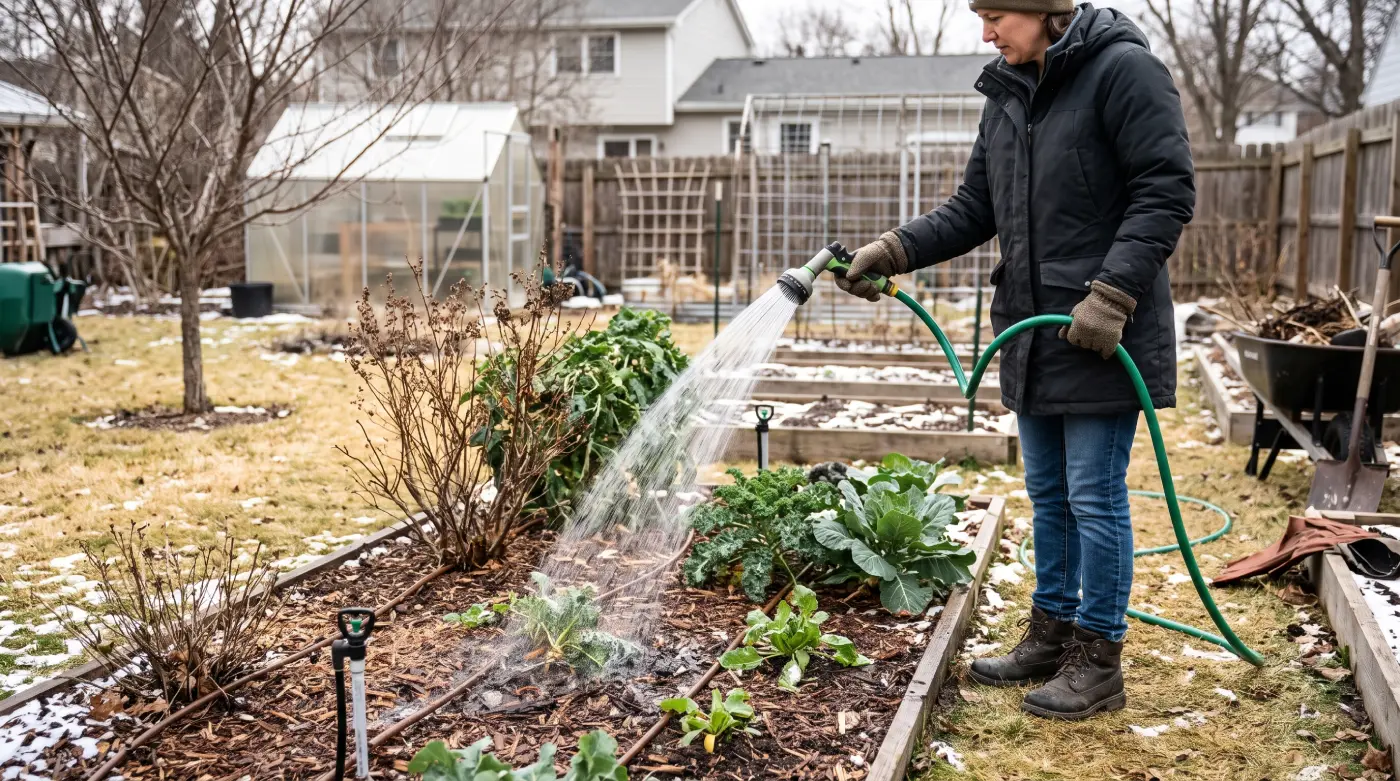
A lawn-irrigation program is not automatically a new-tree aftercare plan. Its coverage, timing, and seasonal operation may not match the recently planted root area.
Tell the installer if irrigation is active, adjusted, or shut down for winter. Include any drip or separate watering system used near the tree.
Avoid having several people water independently without a shared record. A family member may hand-water after an irrigation event because neither knows what the other has done.
A simple log solves much of that confusion. Record checks, rainfall observations, irrigation changes, and any additional watering. The log does not need to be elaborate; it needs to make the current routine understandable.
Know When to Ask for a Site Visit
Persistent saturation, unexplained decline, recurring runoff, or uncertainty about the planting arrangement can justify a closer assessment.
Provide the planting date, tree identity if known, photographs, care instructions, and your observation record. Explain what changed and when.
Do not conceal the original condition with extra soil, fertilizer, or several new products before discussing it. Those changes may not address the cause and can complicate the assessment.
Redmond’s offers garden-center products and tree/shrub installation in the Lexington area. Bringing the actual planting details to that conversation helps the advice focus on the tree and site rather than on a generic winter checklist.
Make Winter Tree Care an Observation Routine
The practical approach to watering newly planted trees in winter is to observe first, account for weather and drainage, and follow a tree-specific plan.
Check conditions regularly, but water only when the assessment indicates it is appropriate. Keep the hose and walking route safe, avoid frozen-ground watering, and record changes that may help a professional understand the site.
This routine gives recent plantings more deliberate care without turning every cold-weather concern into a reason to add water. For a Lexington garden, local observation is the bridge between useful general guidance and the needs of the individual tree.
Redmond’s seasonal gardening guide for Lexington provides wider seasonal context to discuss alongside the needs of your newly planted tree.
Frequently Asked Questions
Do new trees need water after their leaves fall?
They may still need appropriate moisture during establishment, but leaf loss does not create one universal watering schedule. Check the root area, precipitation, drainage, and current conditions. Follow the planting guidance for the tree and ask how the routine should change as the weather becomes colder.
Should I water a newly planted tree when the ground is frozen?
Do not add water to frozen soil as a routine care step. Assess the actual site and seek local guidance if thaw conditions are unclear. Water should be applied only when the tree needs it and the root area can receive it appropriately without creating runoff or ice hazards.
Can winter rain replace hand watering?
It can contribute, but rainfall does not automatically establish the moisture condition of the root ball. Coverage, overhangs, slope, and soil behavior matter. Check the planting area after rain rather than assuming either that watering is unnecessary or that a scheduled hand-watering event must still occur.
How often should I check a new tree?
Use the planting team’s guidance and adjust observation to the tree, weather, and site. Checking and watering are different tasks. A regular check may show that no additional water is needed. Keep a simple record so repeated wetness or rapid drying can be discussed with an adviser.
What should I do if the planting area stays wet?
Pause additional watering and discuss the pattern with the installer or a qualified horticultural professional. Provide photographs and the care history. Persistent wetness may involve drainage, soil, planting arrangement, or another issue that cannot be resolved by following a generic watering schedule.
Review Your New Tree’s Aftercare With Redmond’s
For recent plantings in Lexington and surrounding areas, contact Redmond’s Garden Center with your tree, site, and watering questions. Bring photographs and a short care record so the discussion can focus on what is happening in your garden.
